What is 5G Plus? 5G Plus is the label for fastest 5G network tier. When you see 5G+ in your status bar, your phone has connected to mmWave or C-band 5G spectrum, which delivers significantly faster speeds than standard 5G.
The label appears only in specific locations with dense network infrastructure. It is not available everywhere, and seeing it is not guaranteed even in major cities.
1. What Is 5G Plus?
5G Plus is a term used to describe the more advanced tier of 5G connectivity, one that goes beyond the initial wave of 5G deployments in terms of speed, latency, and network architecture.
Most early 5G networks were built in Non-Standalone (NSA) mode, meaning the 5G radio layer was added on top of an existing 4G core network. This allowed carriers to launch 5G quickly and cost-effectively, but it came with a ceiling: the underlying 4G infrastructure limited how much of 5G’s true potential could actually be unlocked.
5G Plus moves beyond that ceiling. It generally refers to networks running on higher-frequency spectrum like mid-band (such as C-band around 3.45 GHz) and high-band (mmWave, above 24 GHz).
Networks transitioning toward 5G Standalone (SA) architecture, where both the radio access and the core network are fully 5G.
2. What Does the 5G+ Icon Mean on Your iPhone or Android?
The 5G+ icon in your status bar means your phone has connected to a premium tier of 5G, typically running on faster mid-band or high-band spectrum, rather than the low-band frequencies used by standard 5G.
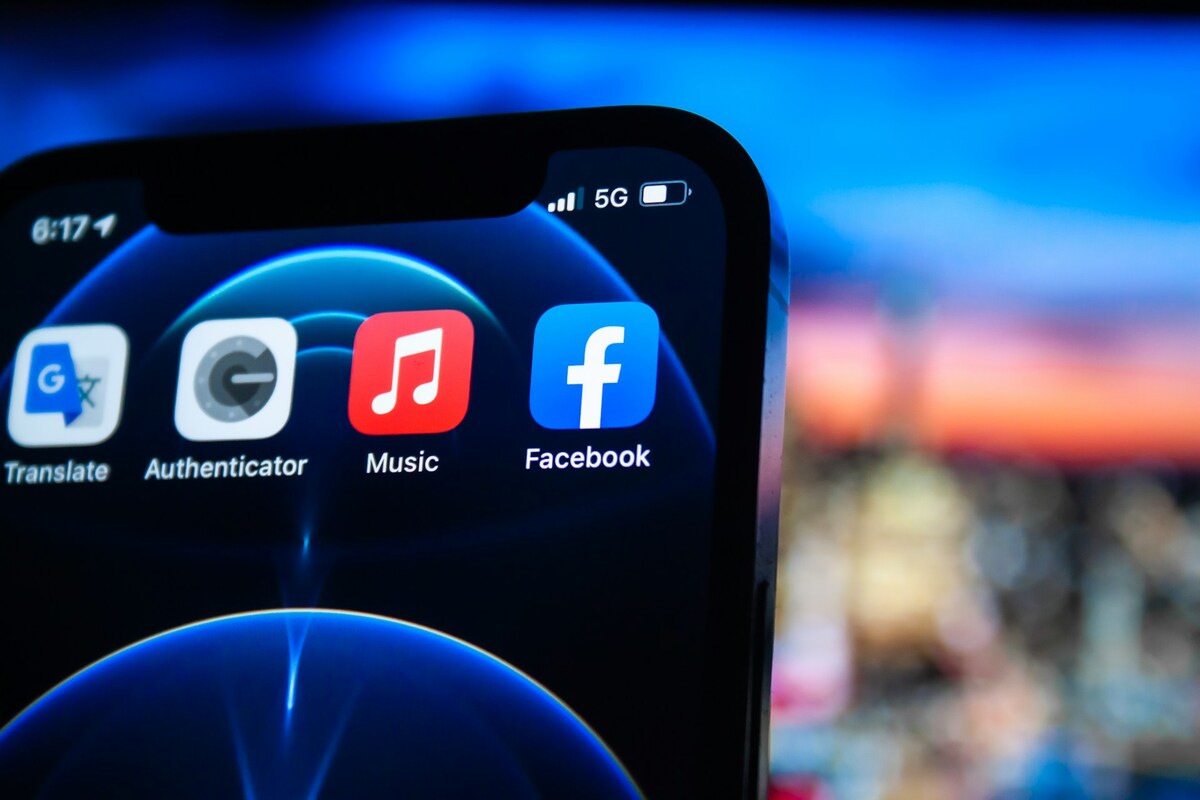
On iPhones, this appears as “5G+” in the top right corner. On Android devices, it appears similarly depending on the manufacturer’s status bar design.
Why 5G+ Coverage Is More Limited Than Regular 5G
Standard 5G typically runs on low-band spectrum. Frequencies like 700 MHz or 850 MHz can travel long distances and penetrate buildings well.
5G Plus relies on mid-band (C-band) and high-band (mmWave) spectrum. C-band offers a useful radius of several city blocks per tower.
mmWave is extremely fast but has very limited range and struggles to penetrate walls and buildings.
Does Seeing 5G+ Actually Mean You Are Getting Faster Speeds?
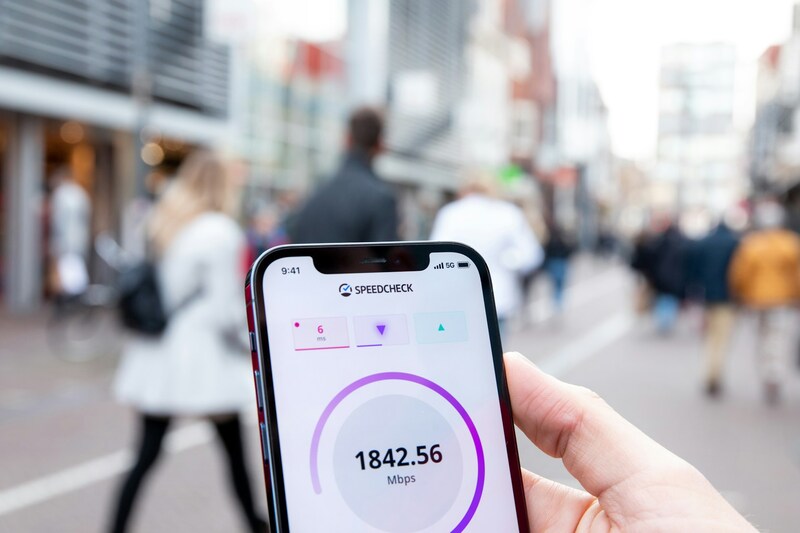
Usually yes, but not always. In a lightly loaded 5G Plus zone, your phone can achieve download speeds of 500 Mbps to over 1 Gbps. That is five to ten times faster than typical low-band 5G speeds of 50 to 150 Mbps.
In a congested 5G Plus zone, such as a packed stadium during an event, speeds can drop significantly as many users share the same spectrum. The icon still appears, but real-world performance varies.
Latency is where 5G Plus consistently delivers. Even under load, mmWave and C-band 5G provide lower latency than low-band 5G or LTE.
>>> Read more: Why Is 5G So Slow? Real Reasons and How to Fix It
3. 5G+ vs 5G UW vs 5G UC: How Every Major Carrier Labels Its Fast 5G
If you’ve switched phones or carriers, you may have noticed that the “fast 5G” icon looks different depending on who your carrier is. That’s because each carrier has its own marketing label for the same underlying concept: a premium tier of 5G running on faster spectrum than standard low-band 5G.
The labels differ, but the technical foundation is largely the same across the board. All of them refer to 5G running on mid-band or high-band spectrum. This is the same C-band and mmWave frequencies described above, as opposed to the low-band spectrum used by standard 5G.
What does vary between carriers is the mix of spectrum they’ve deployed and how broadly they’ve rolled it out. Some have prioritized mmWave in dense urban cores. Others have leaned heavily into mid-band, which offers a better balance of speed and geographic coverage.
4. What Phone Do You Need to Access 5G Plus?
Not all 5G phones support mmWave. Most modern flagship phones support C-band. Compatible phones for 5G Plus include:
- Apple iPhone 12 and later models. The iPhone 12 was the first iPhone to support mmWave 5G, though only on U.S. models. All subsequent iPhone models support both C-band and mmWave 5G where available.
- Samsung Galaxy S21 and later flagships. Samsung’s flagship Galaxy S series supports both mmWave and sub-6 GHz 5G on U.S. variants.
- Google Pixel 6 and later. Pixel phones from the 6 series onward support mid-band 5G. mmWave support varies by model.
- Most flagship Android phones from 2021 onward. Budget and mid-range Android devices often support sub-6 GHz 5G but not mmWave.
5. Conclusion
5G Plus is the name given to the faster, more capable tier of 5G. It runs on mid-band and high-band spectrum rather than the low-band frequencies of standard 5G, and in some cases reflects a full transition to 5G Standalone architecture.
Coverage is more limited than standard 5G and concentrated in urban centers, airports, and venues. You do not need a special plan to access it. You do need a compatible device.
FAQs
Is 5G Plus Available on All Carrier Plans?
On most current postpaid plans, yes. 5G Plus is typically included at no extra cost. Your phone connects to it automatically when coverage is available and your device supports it. There is no premium tier or add-on required. Access to faster 5G spectrum is a standard feature on most current plans across major carriers.
Can I Get 5G Plus in Rural or Suburban Areas?
Rarely for mmWave, sometimes for C-band. mmWave deployment is almost entirely urban and venue-focused due to its very limited range. C-band 5G Plus coverage reaches some suburban areas near major cities but is not widespread in rural markets.
Does 5G Plus Use More Battery Than Regular 5G?
Yes, modestly. mmWave 5G is particularly power-intensive because maintaining the signal at such high frequencies requires more processing from the modem. C-band uses somewhat more battery than low-band 5G but less than mmWave. In practice, the difference is noticeable during sustained high-speed data use.
What Is the Difference Between 5G Plus and 5GE?
What is 5G Plus? 5G Plus and 5GE are entirely different things. 5G Plus is genuine 5G running on fast spectrum. 5GE is a marketing label that some carriers have used for their advanced 4G LTE networks. Despite the name, it is not 5G at all. It runs on 4G LTE infrastructure and delivers LTE speeds. If your phone shows 5GE, you are on a 4G LTE connection.